Monday, March 19, 2012

Galveston Island, Texas


Mon, March 19th

"Galveston, oh Galveston, I still hear your sea winds blowing...." And boy were they blowing today! But there were still quite a few people playing on the beach and in the water. Galveston is a 30 mile long barrier island, one of several that edge the Texas coast and protect the mainland from the sea. 650 miles across the Gulf lies the Yucatan peninsular area of Mexico. This statue was put up in memory of the Great Storm of 1900. It was the deadliest natural disaster in our nation's history killing at least 6,000 people. With a population of 40,000, Galveston was a major center of commerce, the most important seaport in Texas at the time. The hurricane completely covered the island with water from the Gulf of Mexico on the south to the bay on the north. There is a great book, and documentary about it on the history channel, called Isaac's Storm. They have since built a 17 foot concrete seawall and hauled material in to raise the island by 13 feet. In over 111 years there has been only minimal damage and loss of life in the many subsequent storms.

This Tall Ship Museum "Elissa" is in the harbor on the north side of the island. It is in sailing condition and sails on special occasions. She sailed under the British flag in the 1880s, loading Texas cotton for the mills in England.


Also in this harbor is this Off Shore Drilling Rig Museum and Education Center.


We decided to take a walking tour of some of the historic neighborhoods. Most of the homes were destoyed in the 1900 hurricane, but surprisingly some of them have been here since before that storm. This one is now being used for the city Visitor's Center and below is the garden.


This one just down the street on the next block is the Chamber of Commerce.


I would love to live in one of these homes, but only if I could afford a maid and a maintainance man.


These are just a small sample of the pictures I took and houses we saw. Great fortunes were made on cotton plantations, ranching, banking, shipping, resort hotels, etc.


On June 19, 1865 at the close of the Civil War, an order was issued in Galveston that the 1863 Emancipation Proclamation was now in effect. It became known as Juneteenth, marking the end of slavery in Texas. It has been celebrated as a day of freedom since then and grew into an international commemoration. In 1979 it became an official Texas holiday.


Many of the homes had widow walks on top, so the women could watch for their men coming home from the sea (or not), thus the name. This one had a two story widow walk.


In 2008 Hurricane Ike covered most of the island in a tidal surge. This house that was at least 6 or 7 blocks from the beach, shows how high the water was with a white mark at the top of the foundation on the right corner. We saw another house at least 10 blocks from the beach that had marked the water level at the tenth step up to their porch.


A sign in front of this home said the block had 5 feet of salt water and they had 2 and a half feet inside their home. They were out of their home a year for repairs. A lady on their block wanted to save all the big old trees that were destroyed, so she instigated a movement to get artists to make sculptures from them. These herons are carved from an 80+ year old Live Oak. It took the artist one day to complete with three different size chain saws and a chisel.


Each home owner chose the subject for their own sculpture and paid the artist. She chose this Geisha for her tree because she loved the Orient and had made many trips to Japan.


These angels represent the home owner's two granddaughters and were carved from the top of the tree that the Geisha was carved from. It is one of the only sculptures that is not still rooted in the ground.


This one is a large pelican holding a fish.


I think this one is the birds of Galveston.


This one is a pod of dolphins and a mermaid, symbolizing the mother and her children in this home.


This one just looks like a dog sitting in the yard, but it is also carved out of a tree stump.


A pelican and two alligators with leftover Mardi Gras beads hanging on it.


This is an angel cradling a bunny watching over a yard that is a bird, butterfly and bunny sanctuary. The home owner rescued abandoned rabbits after the hurricane and continues to do so.


The sculptures represent a small percentage of the trees that Hurricane Ike destroyed. After the storm the citizens worked to ensure that 100% of the "Iked" wood was kept out of landfills and used for recycling projects. Over a 100 tons of trees were selected for restoration of America's only remaining whaling ship, another 200 tons went to Malaga, Spain to be used in the completion of a full scale replica of the Brig "Galveztown", a local lumber yard took several tons of wood to mill and dry for building projects and several art galleries are featuring and selling a variety of wooden art pieces. That seems like a very organized recycling effort.


More about the Houston area tomorrow.


Tarra

Sunday, March 18, 2012

North Padre National Seashore, Corpus Christi & Magnolia Beach on Matagorda Bay in Texas


Wed, March 7th - Sun, March 18th

We camped five nights at Padre Island National Seashore just a few feet from the beach. This was a rainy, windy day. I took this picture thru the windshield while laying in the bed in the back of the camper. Great day to curl up with a good book.

Remember that Alfred Hitchcock movie "Birds"? This place reminded me of it. Birds everywhere. Lots of Laughing Gulls and little bitty birds called Piping Plovers. They chased the waves out and ran back ahead of them when they came in again, their little feet running as fast as they could. They tap their feet to make it sound like it is raining, so their food will come out of the ground to them.


I don't know what kind this one is, but I bet my granddaughter does, and she will probably let me know. I think it's a sandpiper.


These guys are called Least Terns, the smallest of the terns in America. In the late 1800s they were hunted by the thousands to use their feathers for ladies hats. They are endangered, but there doesn't seem to be any shortage of them here.


Lots of herons and egrets here and this is where the whooping cranes come, but we were a couple weeks late to see their big migration.


While we were there, they had warnings out about the Portuguese Man-of-War jellyfish. Their sting is extremely painful. They are not a single creature, but a colony of smaller animals. The gas-filled float catches the ocean wind. Tentacles poison anchovies and other small fish. Feeding tubes digest the prey. Man-of-War Mackerel are immune to the poison and live within the protective tentacles. The common purple snail preys on the Man-of-War by floating on a bubble raft until it can attach itself.


Fortunately, the only jellyfish we saw were cannonball, sometimes called cabbagehead jellyfish. They don't have tentacles, but can occasionally sting and it's not too serious


There were quite a few of them washed up on the beaches here and at Magnolia Beach where we stayed next.


Here we were taking one of the ferries that connects the highways across to the many islands.


This one is Hwy. 316 to Port Aransas, Mustang Island and North Padre.


There are many causeways like this and ferries to connect all land areas over the mud flats, bays, etc. Notice the RV Park right on the beach of the bay. There are RV parks everywhere down here.


We didn't do much in Corpus Christi, but drive around the city a little. These were replicas of the Nina and Pinta built in Spain in 1992 for the 500th anniversary of the Columbus voyage. They toured American ports and now have a permanent home in Corpus Christi.


This is the USS Lexington Museum.


This is the beach on North Padre a few days before spring break. You can drive on the beach for something like 60 miles and camp free anywhere you like. We saw a few campers here and there, but it was pretty much deserted.


We came back on Monday afternoon and the scene was quite different. It looked like these pictures for miles and miles.


This was only Monday afternoon and they were just getting started. "Bottle of wine, fruit of the vine, when you gonna let me get sober..."


Ah, to be young and crazy, footloose and fancy free! It makes me tired just to think about it.


Tuesday we moved further north to Magnolia Beach on Matagorda Bay, near Port Lavaca. It is free camping on the beach here, also.


We parked right on the beach along with lots of other campers. Wildflowers in the grass, just like most of the highways in Texas, thanks to Lady Bird and her beautify America campaign.


We hadn't even been here a half hour when a big ship went by out in the bay. When the waves came in from the ship's wake they washed right up under the RV. So we moved back about six feet. After that, they came right up to our front step everytime a big ship passed by, several times a day.


I took this picture from the doorway of our mobile beach house.


Life is good on the beach. Can somebody bring me a margarita?


We were out for a walk, but John stopped to watch a big ship go by, while I was taking pictures. Down the beach in the background, you can see the beach campers, mostly Canadians speaking French. Way over half the snowbirds are Canadian.


We drove over to Port O'Conner for the Friday Shrimp and Fish Fry. Fresh seafood, yum! The barges were coming and going at a steady pace.


We watched the shrimp boats coming in with their day's catch. It reminded me of cows coming in at milking time. There was just a long line of them coming in from the ocean. The semis and smaller trucks were lined up waiting to be loaded with fresh seafood.


This is a pile of oyster shells next to the marina.


These brown pelicans and the dolphins just hang around waiting for the scraps.


I picked up shells at each beach that we stayed at. There were completely different kinds of shells at each beach. These are from South Padre.


There were hardly any shells at all at Padre Island National Seashore, just these little bitty ones that were only about a half inch or so across.


At Magnolia Beach, there were just millions of shells, but they were bigger and thicker and a totally different kind. I have a couple of buckets of shells stashed out of sight in the RV. I don't want John to be calling me Lucy (like Lucille Ball in "The Long, Long Trailer). If you've never seen it, it's hysterical!


One last picture as we leave the beaches. We left for Houston today. We are at a campground in League City for a week and will be sightseeing in the Houston area, before heading further north.


Looking forward to connecting with family and friends again about the first week in May.


Over and Out,


Tarra

Tuesday, March 6, 2012

Texas, Pharr, South Padre, Edinburg, Harlingen


Thur, March 1st - Wed, March 7th


I found the pictures I thought I had deleted. The Gruene Dance Hall is the oldest continuously operating dance Hall in Texas (just a few miles north of San Antonio). George Strait, Lyle Lovett, Hal Ketchum and many others started their careers here. There are pictures all over the walls of people who have played here like Bo Diddley, The Dixie Chicks, Jerry Lee Lewis, Garth Brooks , Willie Nelson and John Travolta in "Michael".


"Grandpas Gone Wild" on South Padre Island. We thought we better hurry up and get over to the island and check it out before it gets mobbed with college kids on spring break next week. It wasn't a very clear day for pictures, but it was in the 80s.


It was very windy and there were lots of kites flying. There are many high rise hotels along the beach. The island is 34 miles long bordered to the east by the Gulf of Mexico and the west by the Laguna Madre Bay. It is at the tropical tip of Texas with year round moderate temperatures. It's only a half mile wide at the widest point. They had lots for sale for $495,000.00.


There are millions of sea shells and they are not all broken up, like they are on most of the beaches we have been to. So, of course, I brought a bag full of shells home.


Only the south five miles is inhabited with just over 5,000 residents. But they have a million overnight visitors each year. Driving north along the beach, the roads were drifted over with sand. There was a payloader scooping it up and hauling it back to the beach.


They have lots of old shipwrecks and world class diving off the coast of South Padre Island.
Heading home over the Queen Isabella Causeway, we stopped in Port Isabel, home of Point Isabel Lighthouse, the only lighthouse on the Texas coast open to the public.


Another day we visited friends, Bob & Elva, at Green Acres park in Donna, Texas. They took us to Harlingen to see the original working model of the Iwo Jima Memorial. It was donated by the artist to the Marine Military Academy here. The artist was inspired by the Pulitzer Prize-winning photo and made a scale model within 48 hours that became the symbol of the 7th and final war bond drive. After the war he thought we should have one of massive size at the nation's capital, so he spent over nine years making a working model from molding plaster. It took three more years to complete the bronze casting process and erect it at the Arlington National Cemetery. It was dedicated by President Eisenhower in 1954. The original was stored at the artist's home until it was donated and erected here in 1981. The figures are 32 feet high, erecting a 78 foot steel flagpole with a 12' x 19' flag. The quote on the base is by Admiral Chester Nimitz of Fredericksburg, Tx.


Another day we went to the Museum of South Texas History at Edinburg. It is in the old Hidalgo County Jail across the street from the Court House. Here I am standing in front of a mastadon skeleton. Early in WWII the Texas State Guard Unit at Pharr started training with brooms which were soon replaced with 1903 Springfield rifles. Mexican workers were the solution to war time labor shortages. They became crucial to valley agriculture, but because they were illegal immigrants, they were subject to deportation. In 1942 a U.S.-Mexican agreement enabled Mexican workers (braceros) to cross legally for limited time periods. This agreement continued long after WWII, but I guess we don't need them anymore... or do we? The valley soil produces citrus fruits of superior quality to any other place in the world. They are especially famous for their ruby red grapefruit.


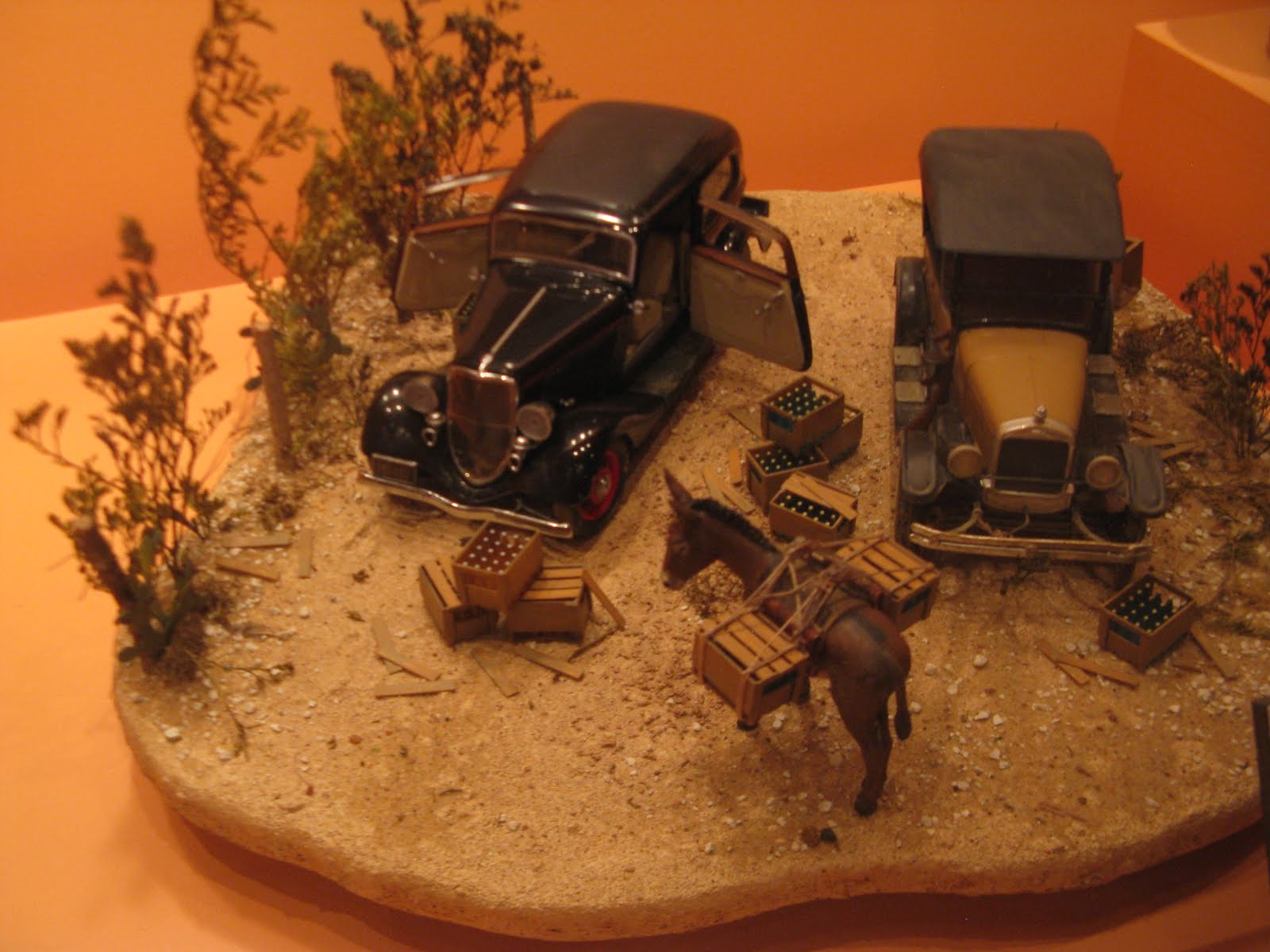
When stuff was being rationed during the war, folks down here were able to cross the border and get things like gas, leather shoes, sugar, etc. This is a picture of the transportation methods used by South Texas bootleggers during prohibition. There were mule trains laden with fiery Mexican tequila crossing the river and fast cars to take it on to San Antonio, Houston, Dallas and beyond, while the "yanquis" flocked to the bars across the river at Rio Rico, Matamoros and elsewhere.

Back at our camp at Tropic Star Resort in Pharr, Texas (near McAllen, just north of the border) I was able to find time to relax by the pool a few times and even joined in the weekly game of scrabble. John joined in the Trivial Pursuit game. We both found that we were a little out-classed by the folks who have been playing every week for many years. Some of these folks have been living here for 20 years, since they retired in their early 60s.

Kind of a cool cloud formation as the sun was setting over our camper. Heading northeast to Corpus Christi Wednesday morning.


Happy Hiking,

Tarra